A quick pinch
The needles are much thinner than the ones used for injections. You may feel a brief pinch as it goes in, or nothing at all.

Dry needling, also called IMS (intramuscular stimulation), uses very fine needles to reach tight bands deep inside a muscle.
When the needle reaches a tight spot, the muscle often gives a quick twitch and then lets go. That release can ease pain and make it easier to move.
It’s based on Western anatomy, not traditional Chinese medicine, and it’s used alongside hands-on therapy and exercise, not on its own.
Done by a registered physiotherapist, using sterile, single-use needles.
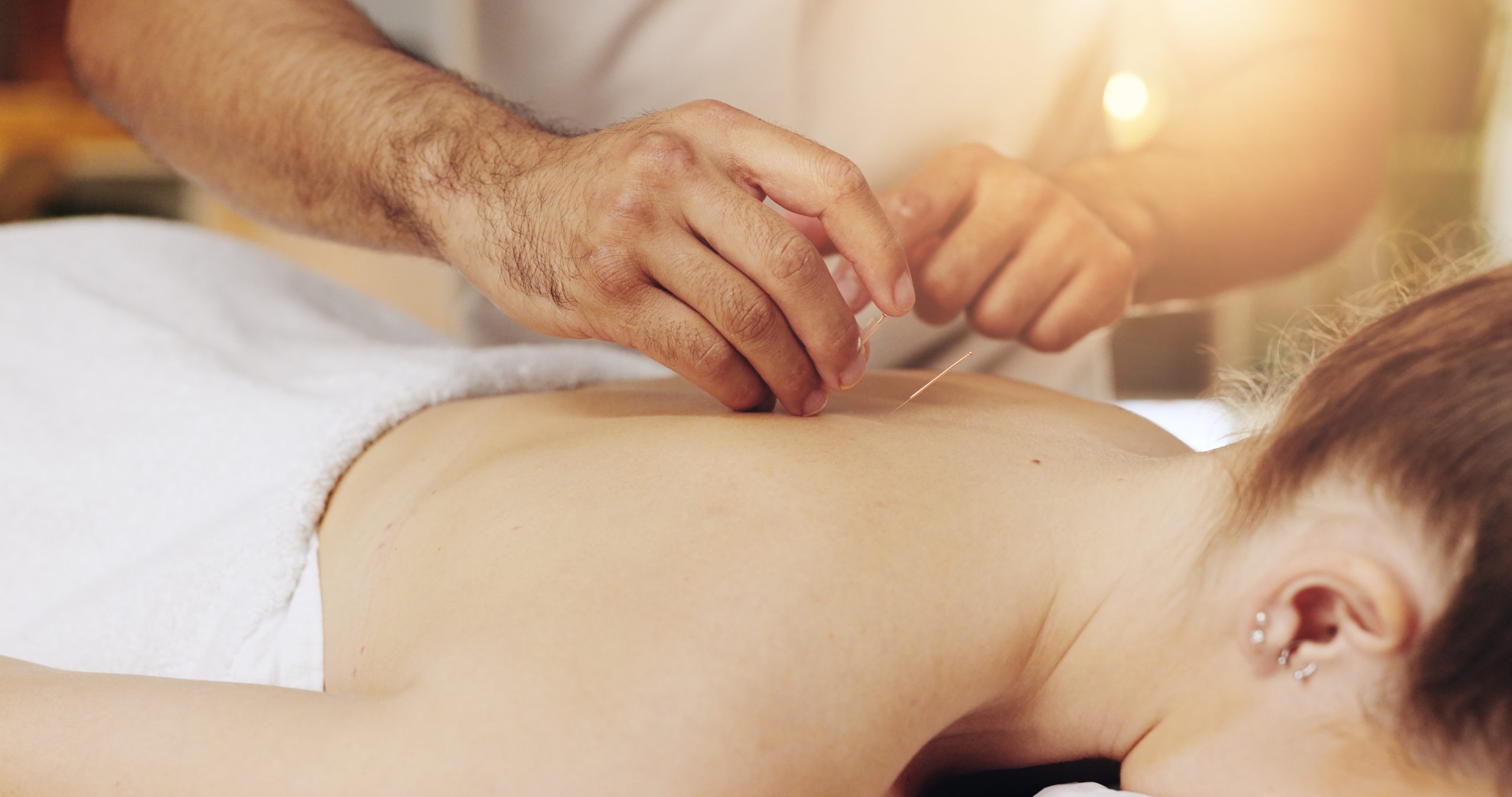
Most people are surprised how little they feel the needle itself.
The needles are much thinner than the ones used for injections. You may feel a brief pinch as it goes in, or nothing at all.
When the needle reaches a tight spot, the muscle may twitch or cramp for a second. That’s the muscle letting go.
The area often feels looser straight away. Some people feel sore for a day or so, a bit like after a workout.
Both use very fine needles, so they’re easy to mix up. Here’s how they compare.
| Dry needling (IMS) | Acupuncture | |
|---|---|---|
| Based on | Western anatomy and how muscles and nerves work | Traditional Chinese medicine |
| Where the needles go | Into tight bands deep in the specific muscle causing the problem | Set points along the body |
| How it’s used | As part of your physiotherapy plan, alongside hands-on therapy and exercise | Usually a separate treatment |
Usually alongside hands-on therapy and exercises.
Don’t see your problem? Call 604-428-3266 and ask.
We ask how things have been and re-test how you move.
Your physiotherapist feels for the muscle bands causing the problem.
Fine needles go in for a short time. We check in with you throughout.
We follow with hands-on work and exercises to keep the release going.
Here are some of the most common questions patients ask.
If you don’t find the answer you need, feel free to contact us!
Yes. We use sterile, single-use needles that are thrown away after each treatment.
No. Dry needling is optional. Your physiotherapist will explain what it involves, and if you’d rather not, there are other treatments we can use instead.
Both use fine needles, but dry needling is based on Western anatomy and targets tight bands in a muscle. Acupuncture is based on traditional Chinese medicine and uses set points along the body.
Some soreness for a day or so is common, a bit like after a workout. Gentle movement and staying active usually help.
Same week appointments available. Most insurance accepted.