Strong, fast tapping
It feels like firm tapping on the sore spot. It can be uncomfortable, so we adjust the intensity to what you can handle.

Shockwave therapy sends strong acoustic pressure waves into a painful tendon or soft-tissue area through a handheld applicator.
It’s used for problems that have hung on for months, where rest, stretching or massage haven’t helped. The waves are thought to boost blood flow and kick-start the body’s repair process in tissue that has stalled.
It’s non-invasive, with no needles or injections, and you can usually go straight back to your day afterwards.
Used alongside exercises that load the tendon, which is what makes the change last.
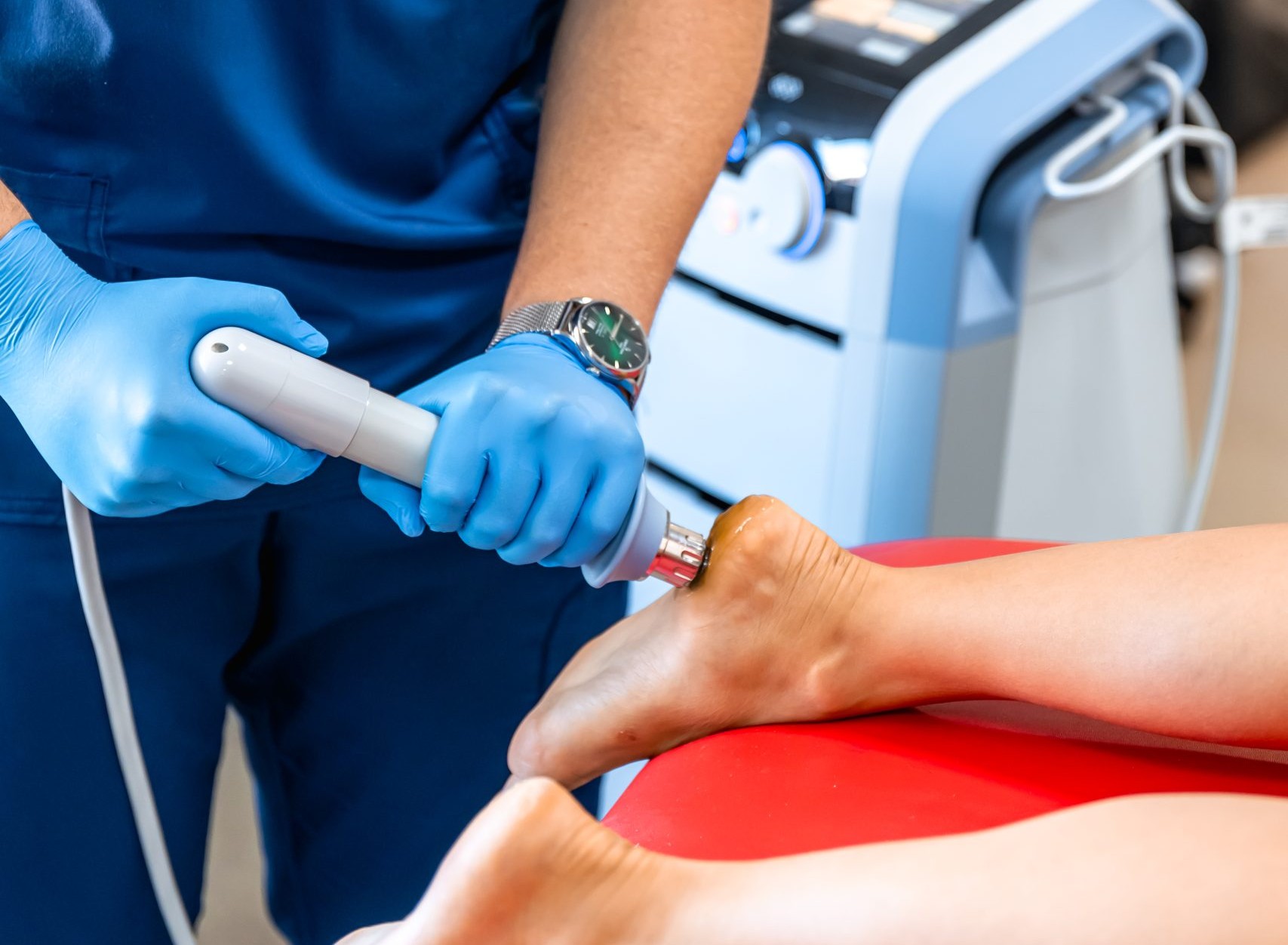
Shockwave is usually done as a short series of sessions.
It feels like firm tapping on the sore spot. It can be uncomfortable, so we adjust the intensity to what you can handle.
The shockwave part takes only a few minutes of your visit. The rest is hands-on work and exercises.
The area may feel tender for a day or two. Your physiotherapist will tell you how to adjust activity in the meantime.
Mostly tendon and soft-tissue problems that haven’t settled.
Don’t see your problem? Call 604-428-3266 and ask.
We ask how the pain has been and re-test the area.
We locate the most tender part of the tendon or tissue.
A few minutes of treatment, at an intensity you can handle.
We finish with loading exercises to strengthen the tendon.
Here are some of the most common questions patients ask.
If you don’t find the answer you need, feel free to contact us!
Shockwave is usually done as a series of sessions spaced out over a few weeks. Your physiotherapist will give you an estimate after your assessment, based on your problem and how long you’ve had it.
The shockwave itself takes a few minutes. It’s part of a regular physiotherapy visit that also includes re-testing, hands-on work and exercises.
Usually yes, with some adjustments. Your physiotherapist may ask you to go easier on hard activity for a day or two and will tell you what’s fine to keep doing.
It’s usually not used during pregnancy, if you have a blood-clotting disorder or take blood thinners, or if there’s an infection or tumour in the area. Your physiotherapist checks this before starting.
Same week appointments available. Most insurance accepted.