Hands-on therapy
Hands-on care isn’t standard at every clinic. Here, it’s at the heart of most visits: mobilization, manipulation, trigger point work, deep tissue massage and myofascial release to free up stiff joints and tight muscles.

Most plans combine two or three of these. Open any treatment to see how it works and what it’s used for.

Hands-on care isn’t standard at every clinic. Here, it’s at the heart of most visits: mobilization, manipulation, trigger point work, deep tissue massage and myofascial release to free up stiff joints and tight muscles.

Very fine needles reach tight bands deep in a muscle that hands can’t get to. The muscle often gives a brief twitch, then relaxes.

Muscle testing shows which muscles are overworking and which aren’t firing. Targeted exercises then retrain the pattern.

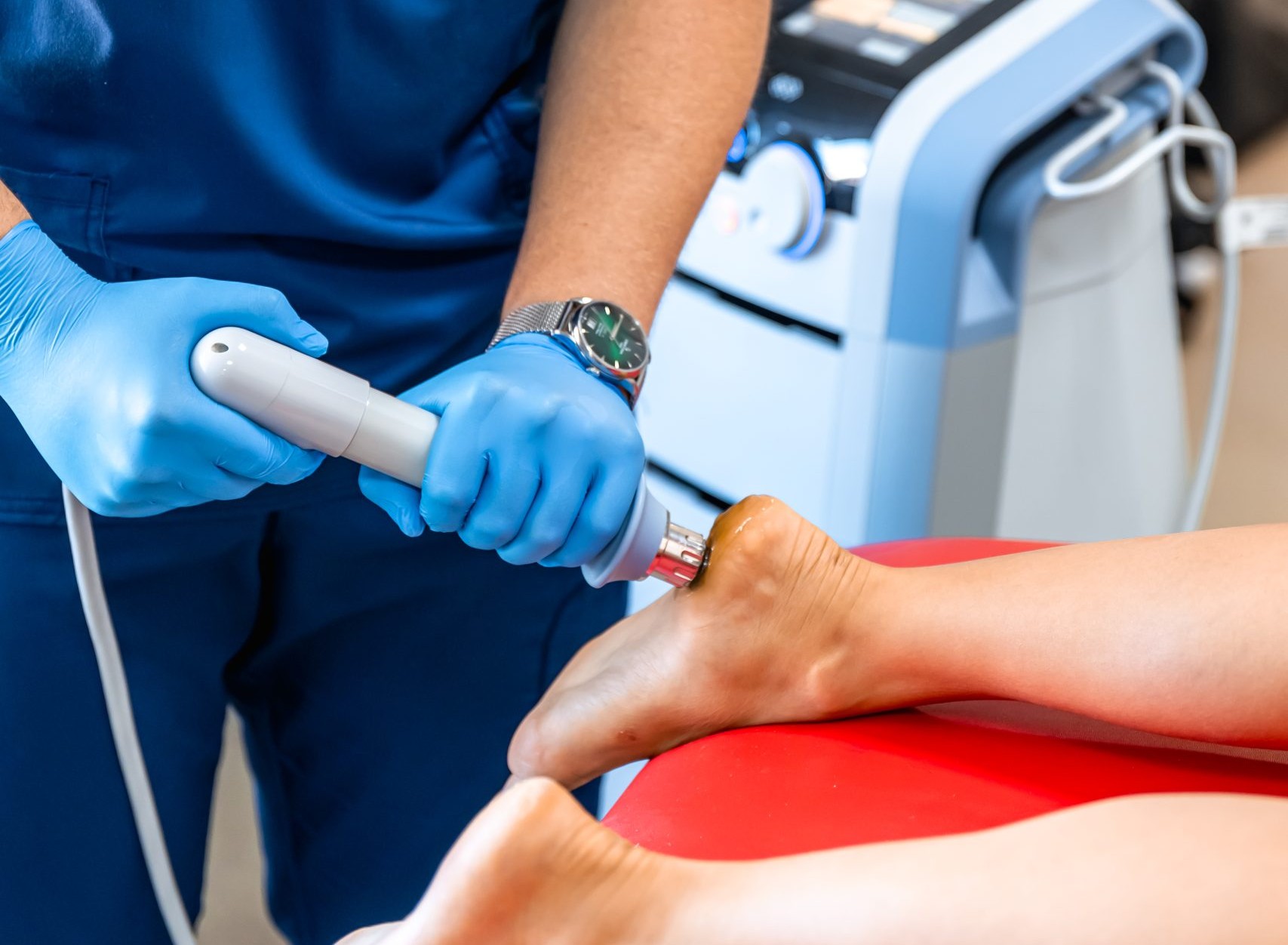
Acoustic waves applied to a stubborn tendon or soft-tissue problem. Short sessions, usually as a series, with no downtime.

Small electrical currents to help calm pain and wake up muscles. Used alongside hands-on care and exercise, not on its own.

Real-time imaging of muscles, tendons and ligaments, so your physio can see what’s happening and track healing.
Call to ask about itYou don’t need to choose. Book an assessment and your physiotherapist will recommend the mix that fits your problem, your goals and your schedule.
Book an assessmentWe ask how it started, then test how you move to find the cause.
Hands-on work plus the treatments that suit your problem.
Exercises that keep you progressing between visits.
Some of the most common problems we see. Don’t see yours? Call 604-428-3266 and ask.
Stiff neck · Tension headaches · Whiplash
Rotator cuff pain · Stiff shoulder · Gym injuries
Tennis elbow · Golfer’s elbow · Wrist strain
Recurring low back pain · Lifting strains · Hip pain
Runner’s knee · Ligament sprains · Pain on stairs or squats
Plantar fasciitis · Achilles pain · Ankle sprains
We treat ICBC and WorkSafeBC patients. Bring your claim number to your first visit and we’ll take care of the paperwork.

Whiplash, neck and back pain after a crash

Lifting injuries, strains and repetitive strain
Here are some of the most common questions patients ask.
If you don’t find the answer you need, feel free to contact us!
You don’t need to know before you book. At your first visit, your physiotherapist assesses how you move to find the cause of your pain, then recommends the treatments that fit. Most plans start with hands-on therapy and exercises.
Yes, and most plans do. A visit might combine hands-on therapy with shockwave, dry needling or electrotherapy, plus exercises to do at home.
It depends on the problem and how long you’ve had it. After your assessment you’ll get an honest estimate, and your physiotherapist will check your progress as you go.
Some treatments can be uncomfortable for a moment, but they shouldn’t be more than you can handle. Your physiotherapist explains what you’ll feel before starting and adjusts as you go.
Yes. Most plans include a few simple exercises to keep you progressing between visits. They’re chosen for your problem and your schedule, not a generic sheet.
Same week appointments available. Most insurance accepted.